
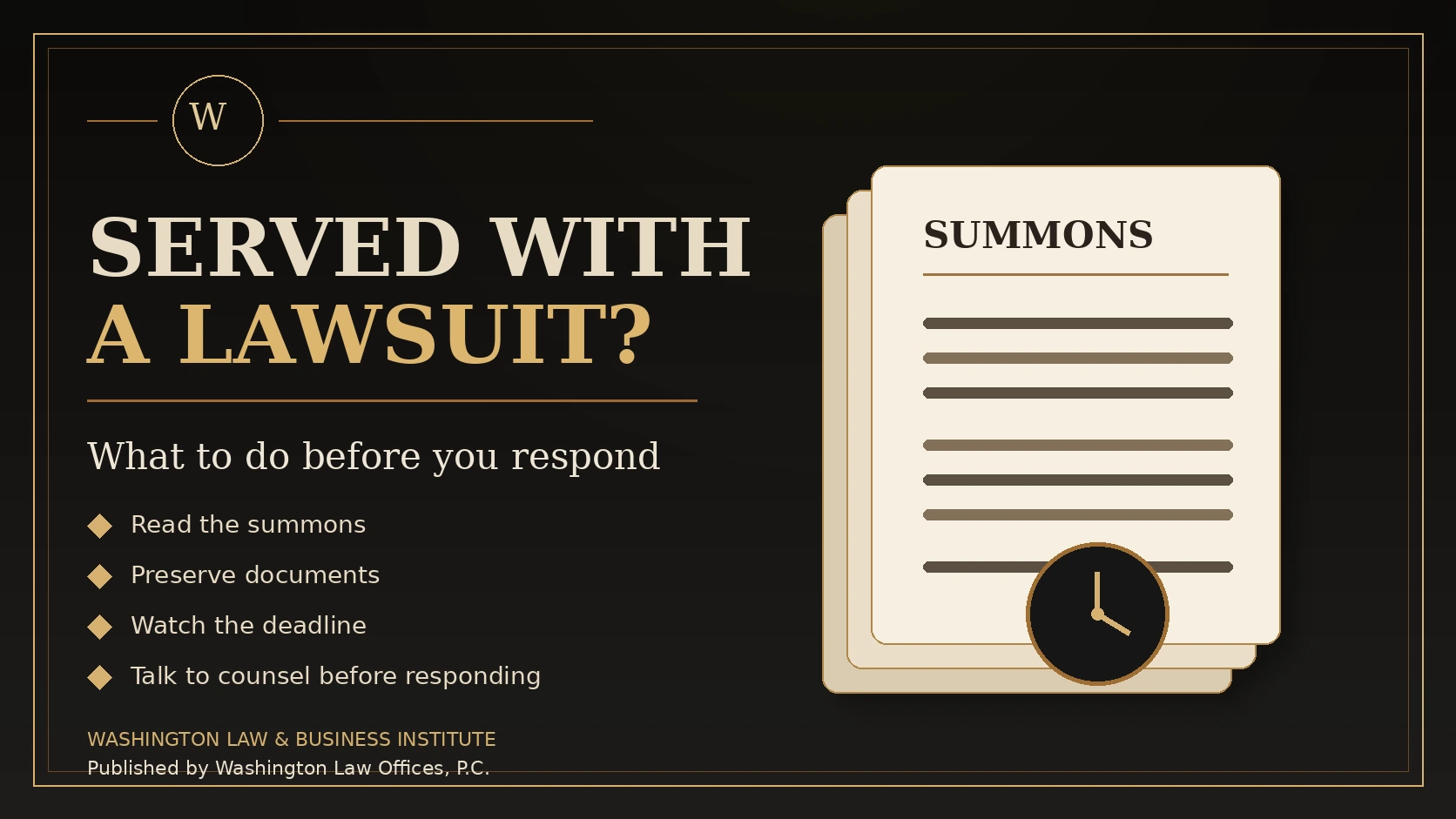
Being served with a lawsuit is serious. Whether the case involves a business dispute, contract claim, collection matter, property issue, foreclosure issue, landlord-tenant matter, or another civil dispute, one of the first mistakes people make is waiting too long to respond.
A summons and complaint are not just paperwork. They are formal court documents. They tell you that a case has been filed, identify who is suing you, describe what the plaintiff is claiming, and set the stage for your response.
In many Illinois civil cases, the summons requires the defendant to file an answer or otherwise appear within 30 days after service, excluding the day of service. Illinois Supreme Court Rule 181 addresses appearances, answers, motions, and how the response period is calculated. Some cases, however, may involve different procedures, specific court dates, or shorter practical timelines.
That is why the safest course is simple: do not put the papers in a drawer, and do not assume you have more time than you actually have.
First, read the summons carefully.
The summons usually tells you the court where the case was filed, the case number, the names of the parties, the deadline or court appearance date, and what you are expected to file or do next.
Do not rely on memory. Write down the date you received the papers and keep the envelope, summons, complaint, exhibits, and any other documents together.
If someone else accepted service for you or your business, make a note of when and how you received the documents.
Deadlines can control strategy. A strong defense can be weakened if the response is late, incomplete, or filed without a clear plan.
Second, do not ignore the complaint.
The complaint is the plaintiff’s version of the dispute. It may include allegations you disagree with. It may leave out important facts. It may attach contracts, invoices, notices, emails, account statements, or other documents.
That does not mean the allegations are automatically true. It also does not mean you should respond emotionally or informally.
Your response should be based on the law, the facts, the available defenses, and the procedural posture of the case.
Depending on the situation, the proper response may involve filing an appearance, an answer, affirmative defenses, a motion, or another court filing. The right move depends on the claims being made and the documents involved.
Third, preserve documents and communications.
Once you know a lawsuit has been filed, preserve anything connected to the dispute.
That may include contracts, emails, text messages, invoices, payment records, letters, notices, photographs, videos, corporate records, insurance policies, settlement communications, calendar entries, and notes.
Do not delete messages. Do not alter documents. Do not “clean up” files. Even innocent changes can create problems later if the other side claims evidence was destroyed or manipulated.
A good legal strategy starts with a clean factual record.
Fourth, be careful about talking to the other side.
After being sued, many people are tempted to call the plaintiff, opposing counsel, a business partner, a contractor, a lender, or another involved party to “explain what really happened.”
That can backfire.
A casual statement can be taken out of context. An apology can be treated as an admission. A rushed payment agreement can create new obligations. A text message sent in frustration can become an exhibit.
Before contacting the other side about the lawsuit, get legal advice about what should be said, what should not be said, and whether communication should go through counsel.
Fifth, check whether insurance or a contract may apply.
Some lawsuits trigger insurance coverage, contractual defense rights, indemnity provisions, or notice obligations.
This can matter in business disputes, property claims, construction disputes, professional disputes, and certain negligence-related claims.
Review any relevant contracts and policies quickly. Many insurance policies and contracts require prompt notice. Waiting too long can create unnecessary coverage or reimbursement problems.
Sixth, prepare for a legal consultation.
When contacting a lawyer, bring or send the full set of lawsuit papers. Do not send only the first page. The complaint, summons, exhibits, and service documents all matter.
Helpful information includes when and how you were served, whether any court date is listed, whether you have prior communications with the plaintiff, whether there is a written contract, whether insurance may apply, whether you have been sued before by the same party, and what outcome you want if the case can be resolved.
The more complete the information, the faster counsel can evaluate the matter.
Do not wait until the deadline is close.
Waiting until the last few days limits your options.
A lawyer may need time to review the pleadings, investigate the facts, evaluate defenses, communicate with opposing counsel, prepare filings, or appear in court.
Early legal guidance can help you avoid preventable mistakes and make better strategic decisions from the start.
First-response checklist
- Read the summons and write down the response deadline or court date.
- Keep the summons, complaint, exhibits, envelope, and service papers together.
- Preserve contracts, emails, texts, invoices, notices, photographs, insurance policies, and related records.
- Do not call the other side to explain, apologize, argue, or negotiate before getting legal advice.
- Check whether insurance, a contract, or an indemnity provision may require prompt notice.
- Schedule a legal consultation early enough for counsel to review the papers before the deadline.
Contact Washington Law Offices
If you have been served with a lawsuit in Illinois, do not guess your way through the first deadline. Washington Law Offices can review the papers, help you understand the claims, evaluate possible defenses, and discuss the next step.
Washington Law Offices, P.C.
Elgin Office
2000 Larkin Ave., Suite 304
Elgin, IL 60123
Phone: 888.586.4441
Website: ilwashingtonlaw.com
Legal information notice
This article is for general informational purposes only and does not create an attorney-client relationship. Every case depends on its specific facts, documents, deadlines, court orders, local rules, and applicable law.